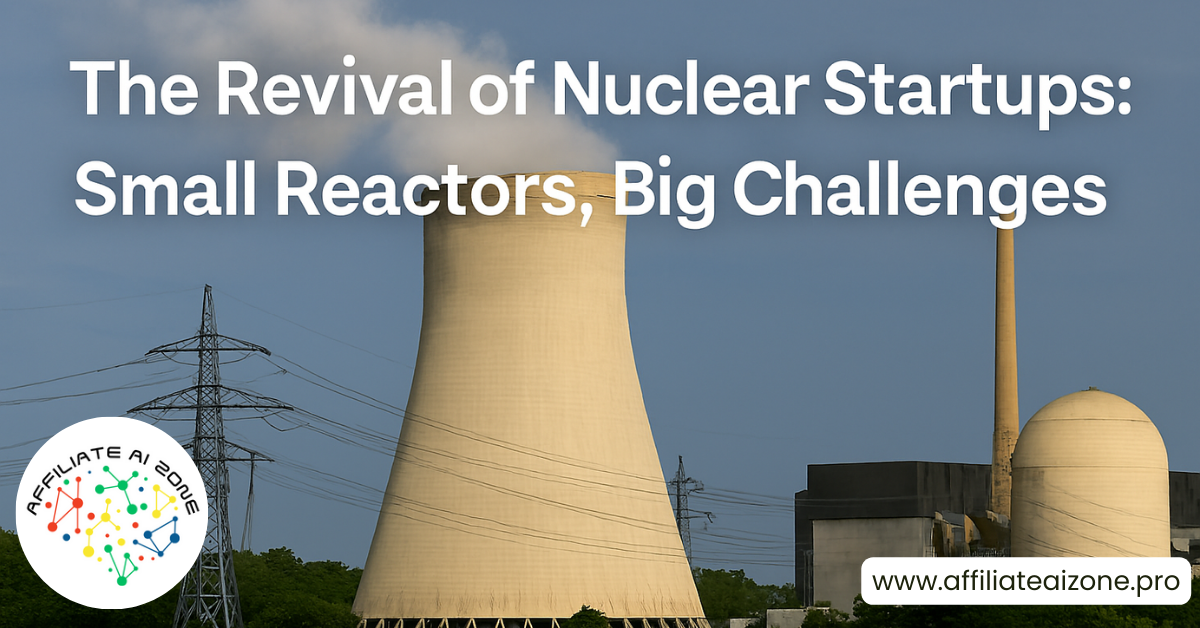

In the ever-evolving landscape of clean energy, nuclear power is making a comeback. Once dismissed due to safety concerns, high costs, and the challenges of managing radioactive waste, nuclear startups are now back in vogue. The renewed interest is largely driven by small modular reactors (SMRs)—compact, factory-built nuclear systems that promise scalability, efficiency, and reduced risk compared to traditional plants.
Why Nuclear Energy is Back in Focus
The global demand for clean, reliable energy is surging. Solar and wind have made remarkable strides, but their intermittent nature leaves gaps in supply. Nuclear energy, with its ability to provide constant baseload power, is being reconsidered as a critical piece of the clean energy puzzle. Unlike fossil fuels, nuclear power produces no carbon emissions during operation, making it a potential ally in the fight against climate change.
The Rise of Small Modular Reactors
Traditional nuclear plants are massive, expensive, and take decades to build. SMRs, on the other hand, are designed to be factory-produced and transported to sites, reducing construction time and costs. This modular approach allows for flexible deployment in remote areas, industrial zones, or even alongside renewable energy projects.
Companies like TerraPower, founded by Bill Gates, and NuScale Power have been at the forefront of SMR innovation. While TerraPower shifted to larger designs in 2023, NuScale faced setbacks with its first project being shut down. Yet, dozens of startups across the US, Canada, and the UK continue to push forward, backed by patient investors and government-funded demonstration
Challenges Facing Nuclear Startups
Despite the optimism, hurdles remain.
- Regulatory approval: Nuclear projects face stringent safety and licensing requirements that can delay progress.
- High upfront costs: Even with modular designs, building reactors and factories requires billions in investment.
- Public perception: Decades of skepticism around nuclear safety and waste disposal continue to haunt the industry.
- Scaling to commercial viability: Many startups have promising prototypes but lack the infrastructure to deliver at scale.
The Investor Perspective
Large investors are increasingly willing to take big risks for potentially transformative payoffs. The nuclear sector offers the allure of long-term energy independence and climate-friendly solutions. However, patience is key—most startups are years away from commercial deployment, and only a handful will survive the rigorous testing and scaling process.
The Road Ahead
The resurgence of nuclear startups signals a shift in how the world views energy innovation. If SMRs can overcome regulatory, financial, and technical barriers, they could become a cornerstone of the clean energy transition. The next decade will determine whether nuclear startups can deliver on their promise or remain another chapter in the long history of nuclear ambition.